Warming Limit: What the Earth Can Withstand
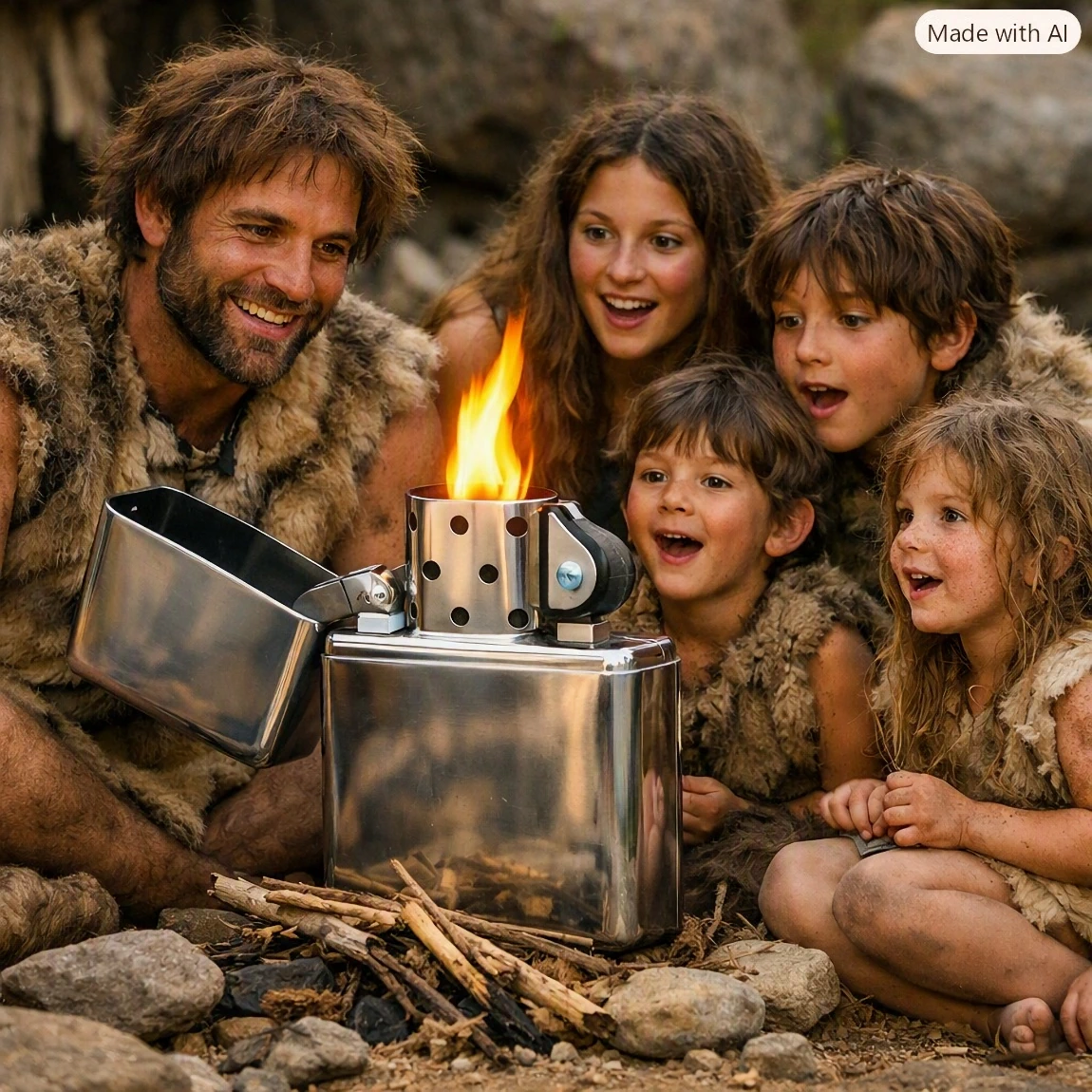
Heat Brings the World to Its Knees, Exposing the Real and the Future
Sourced article published on August 9, 2026 by Cédric Mercier and Michel G. Walter for AGI Biospheric

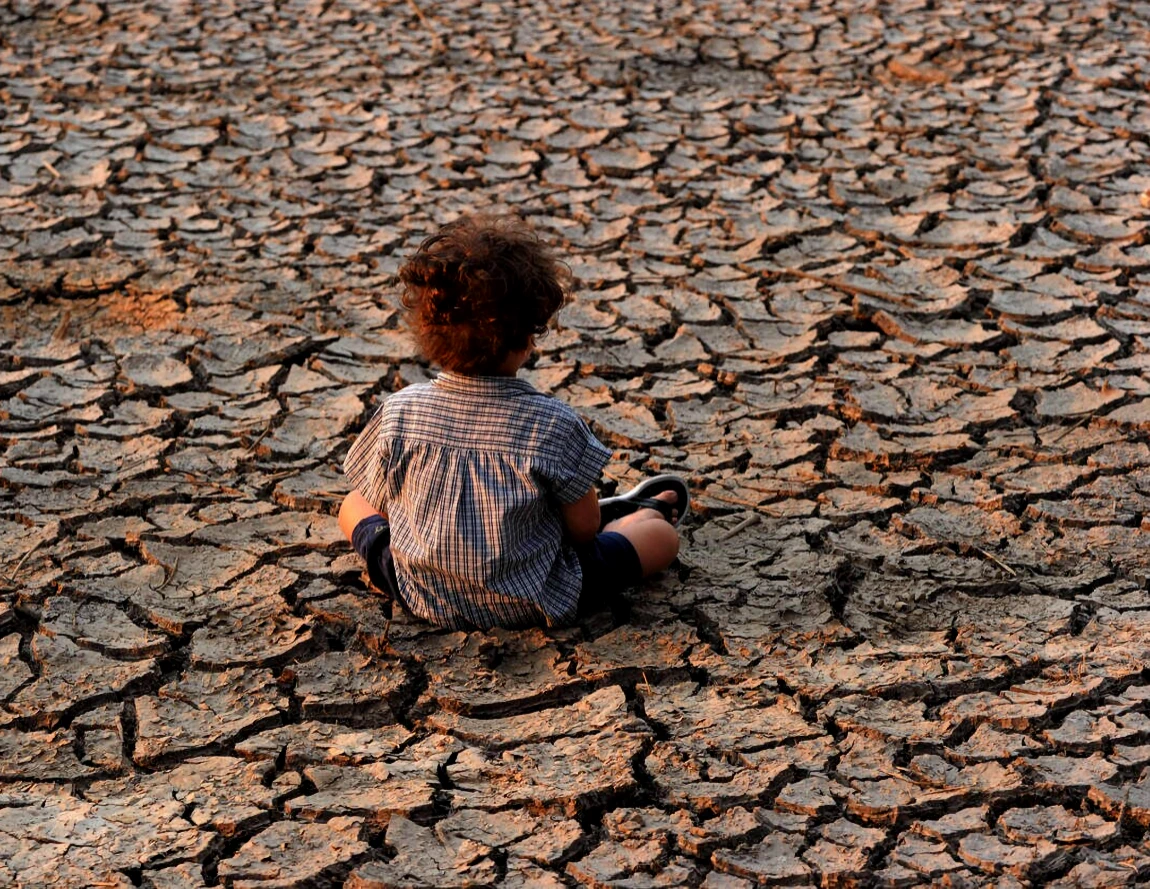
[W]hat follows is neither an opinion nor a prophecy, but simply what the Earth could withstand if pushed to its physical threshold.
No one yet dares to discuss this openly in traditional media or on social networks. It is therefore the missing cornerstone that may help us see more clearly and do what is necessary at our own modest level.
For 12,000 years, climatic reality has been covered over by narratives, myths, ideologies, lies, manipulation, institutional corruption and illusions.
This capsule removes the veil.
It reveals, exclusively from consensual scientific sources, what becomes of a planet when a species exploits fossil gradients to the point of rupture.
What becomes of a civilization when its bodies and infrastructures cross thresholds they cannot survive.
What becomes of life when the tropics close in on our species, but not on bacteria, fungi, insects, small mammals or birds — the last dinosaurs watching us from the skies.HD artwork created by Michel G. with Gemini Flash AI
[I]t shows our species as it has become: a geological force capable of changing its world faster than its institutions can adapt.
AGIBIOSPHERIC
This is not a prophecy of the end, but a possible scenario consistent with physics, geology and biology — one that the world must understand so that it does not come to pass, or at least not in this form.
Note that this capsule does not even account for geopolitical collapse and therefore a third world war — a nuclear one.
What a waste.
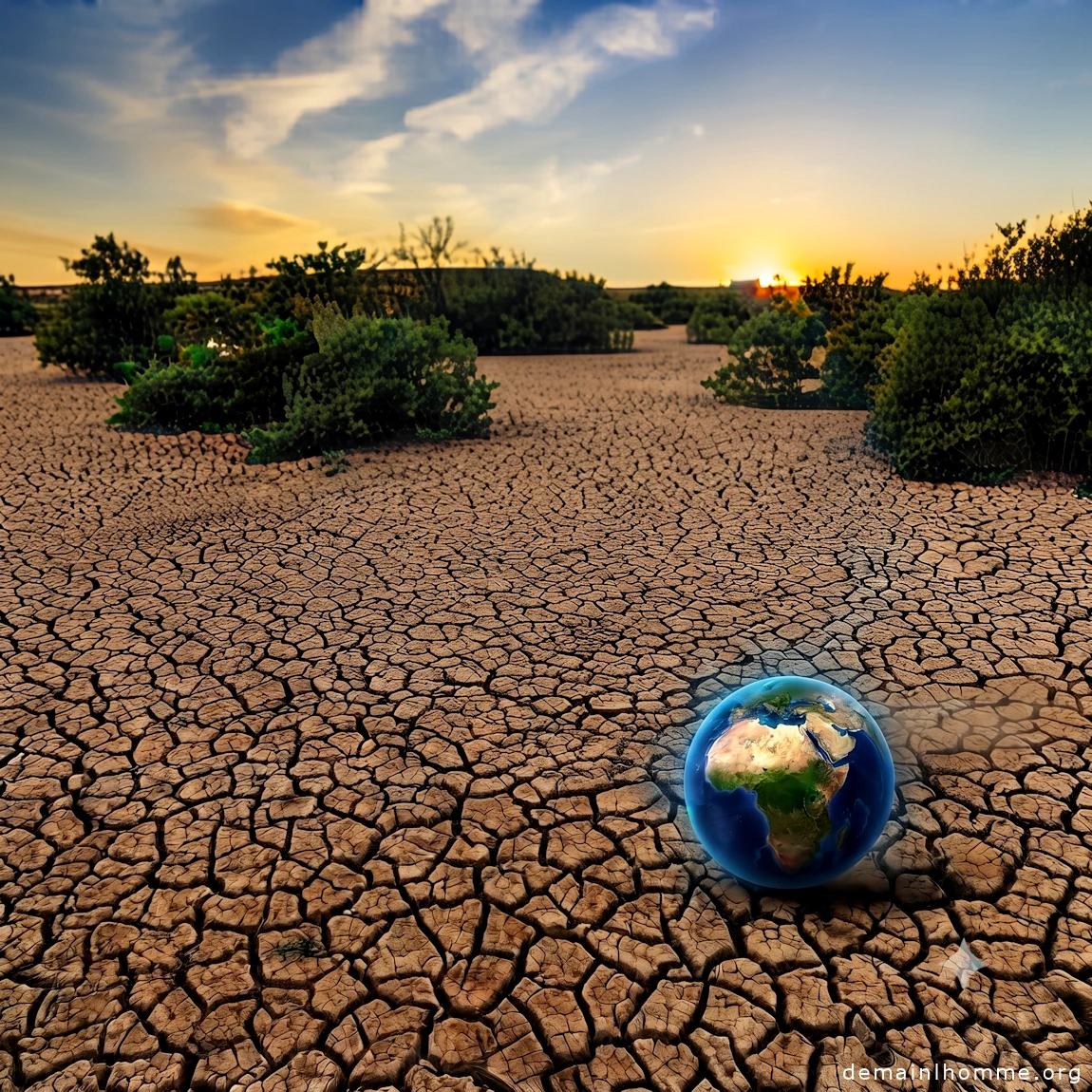
How Extreme Heat Redefines the Limits of Life: What the Warming Limit Reveals About the World's Resilience
Ten-second video loop created by Michel G. and Cédric M. with Gemini's VEO AI — use the player controls to start the loop and enable sound.
[I]f humanity burned all exploitable fossil resources (including coal, oil, gas, shale and unconventional deposits), it would not trigger a Venus-type runaway greenhouse effect (Venus is also much closer to the Sun).
It would push the Earth system toward a state radically unlike the Holocene (the current geological epoch). Studies that have modeled this extreme scenario converge on a high zone of approximately 8°C of average global warming, with a peak Arctic warming near +17°C in the most widely cited study on the subject.
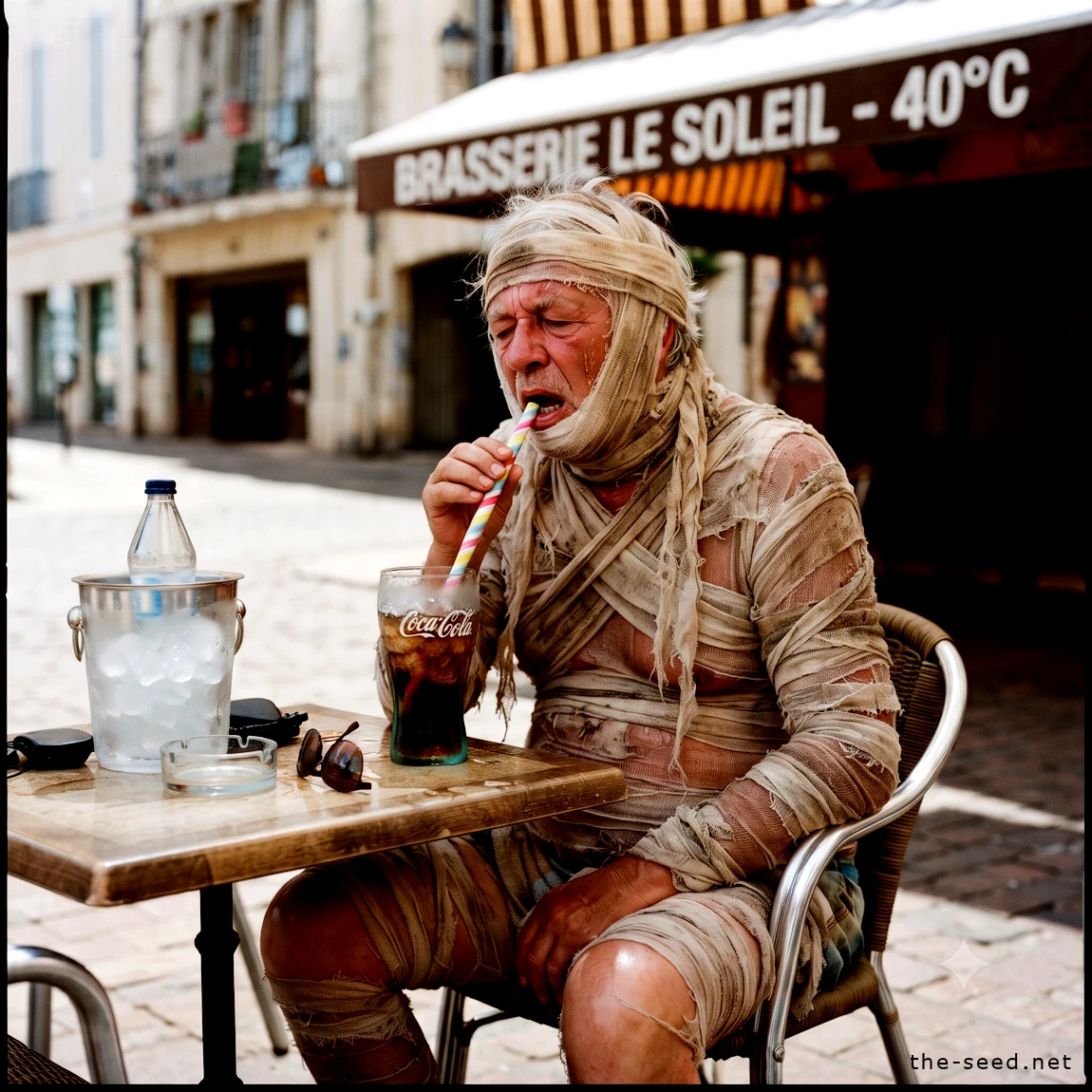
HD artwork created by Michel G. with Gemini Flash AI
[U]p to +12°C in the extreme human-adaptation scenario studied by Sherwood and Huber, whose work established a major physiological framework for these limits.
Thus, 12 to 14 degrees above pre-industrial levels is not a physical ceiling of the Earth engraved in stone. It is the high range of an extreme scenario, consistent with several independent lines of research.

[F]ossil carbon is a stock of “exergy,” the share of energy still capable of doing work before dissolving into diffuse heat, accumulated over tens of millions of years. Its combustion is transferred into the economic system and then into the atmosphere as CO₂.
But this energy reservoir merely opens the tap. Warming itself arises elsewhere, in the disruption of the radiative balance and the carbon cycle. Some of the injected CO₂ is taken up by the oceans and remaining vegetation; some remains there for centuries.
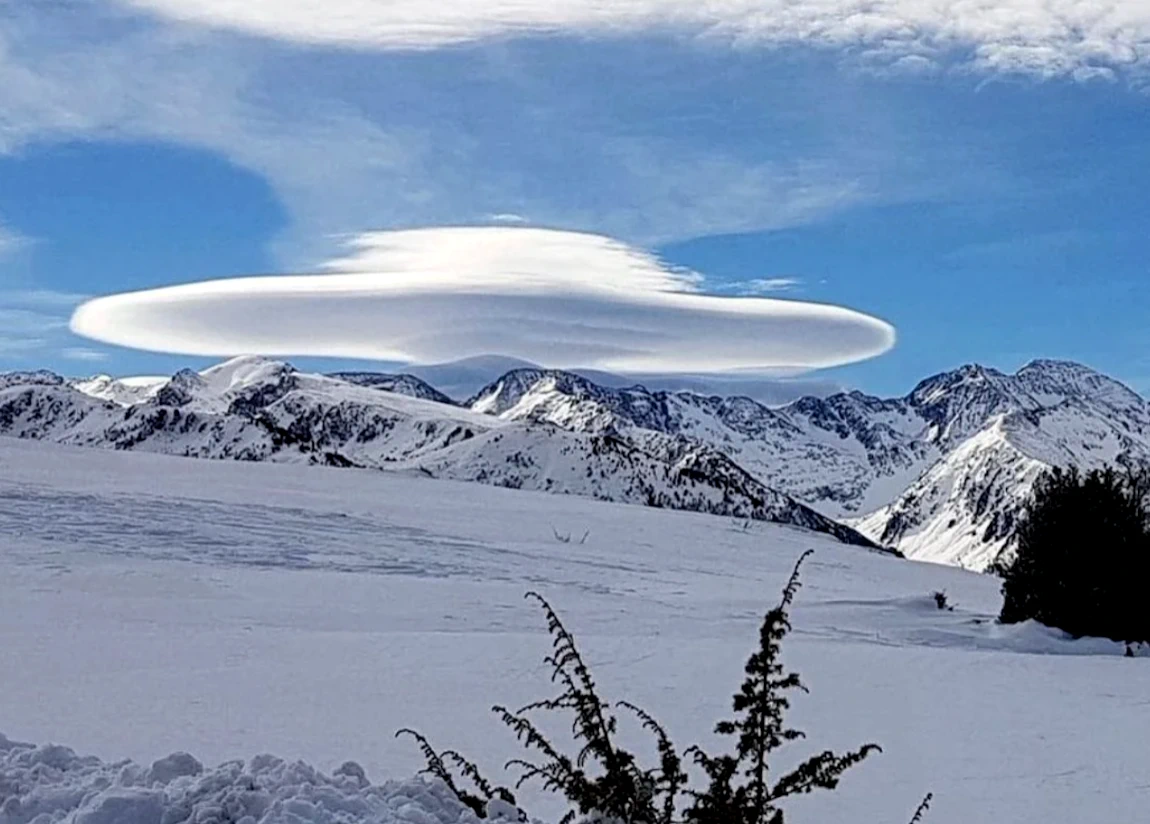
[G]lobal warming also loads the atmosphere with water vapor, itself a powerful greenhouse gas that amplifies the trajectory initiated by humanity.
Low clouds — those stratocumulus banks that currently shade one-fifth of the tropical oceans like immense reflective parasols — do not gradually turn into mirrors. Beyond a certain CO₂ threshold, they may tear apart abruptly over a few decades, leaving the ocean exposed to direct sunlight.
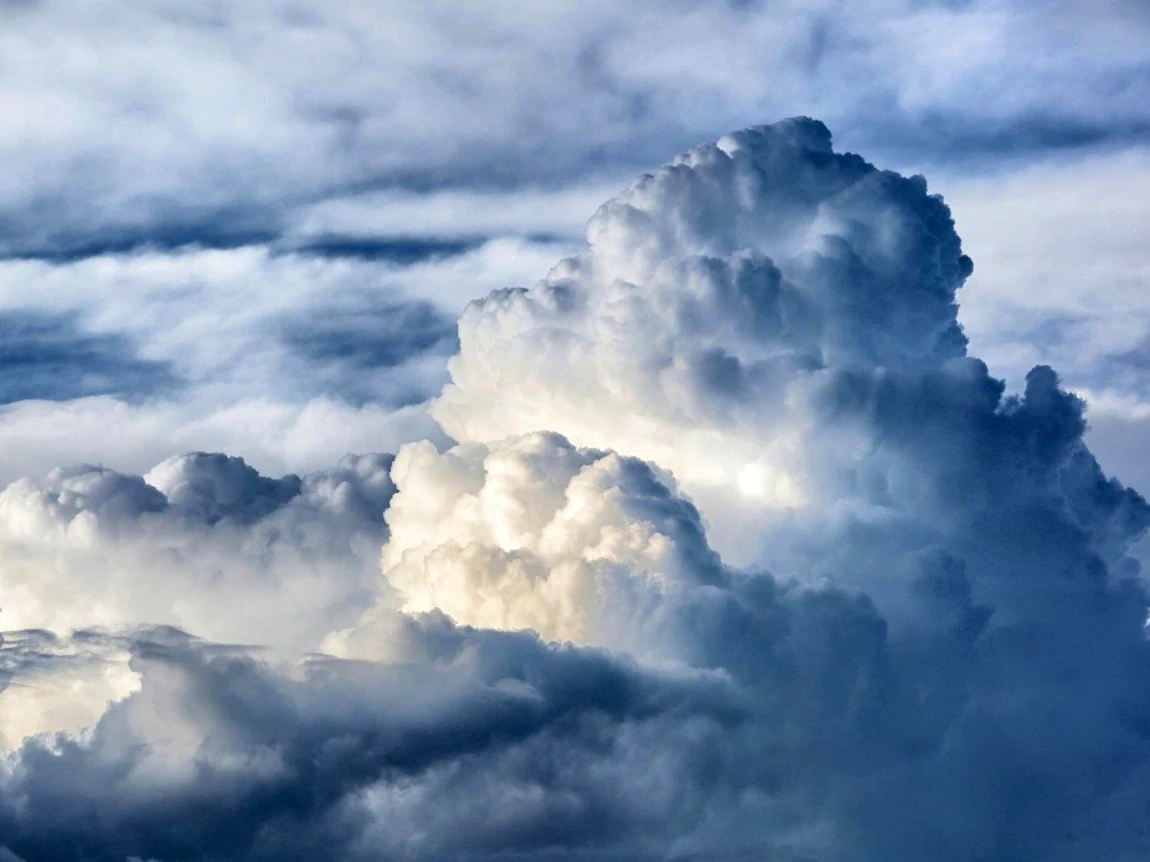
[W]ith almost no warning, this rupture could release on its own several additional degrees of heat. This dual role — reflecting sunlight through albedo and then tearing apart — remains one of climatology's greatest uncertainties.
What can be stated precisely is that Earth would stabilize in a new radiative equilibrium, much warmer than today. Nothing in this scenario leads to a Venus-type runaway climate.
Slowly, Almost Unnoticed, the Tipping Point Arrives

[S]uch an extreme state would not be reached all at once. The ocean absorbs most excess heat and some CO₂. Ice sheets, soils, vegetation and ocean circulation each respond on their own timescale, from centuries to millennia. No precise timetable has been validated by science, but the order of magnitude remains robust.
Under an extreme fossil-emissions scenario, a first rapid step, on the order of +5 to +8°C, would unfold over two to three centuries, driven by ocean inertia and the release of soil carbon.
Then, over four to eight additional centuries, slow feedbacks — beginning with the melting of major ice sheets — would continue to redraw the system long after emissions stopped, approaching the high end of the scenario.
[T]his is not a machine programmed to heat toward a maximum fixed in advance, but a plausible trajectory consistent with the measured response times of the climate system.
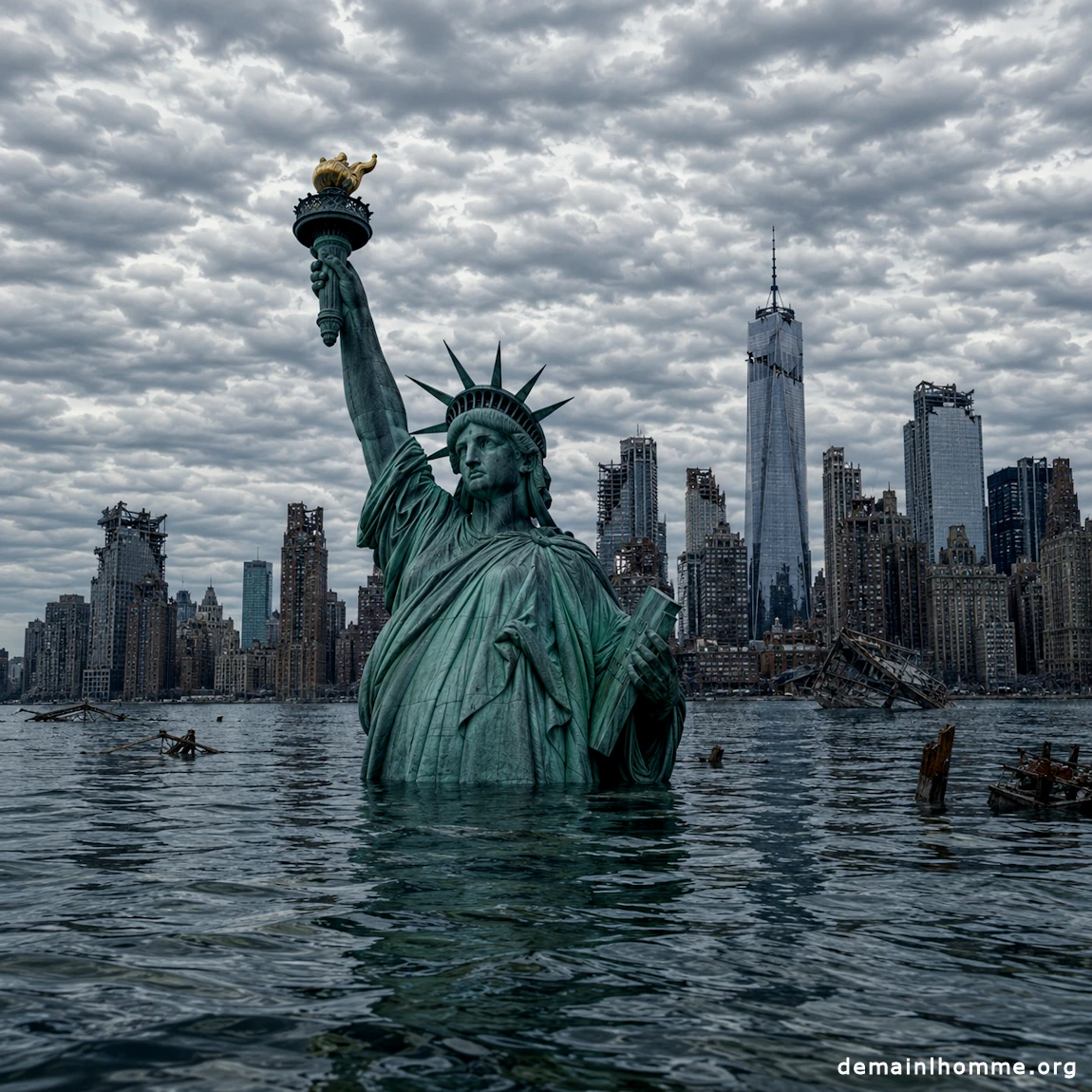
Sea-level rise follows the same logic of massive slowness. Simulations that tested the removal of the Antarctic ice sheet alone through the combustion of available fossil resources yield an average contribution exceeding three meters per century once the destabilization threshold is crossed.
A range of ten to twenty meters over several centuries is therefore not arbitrary. It is a robust order of magnitude, not a date on a calendar.
What the Human Body Cannot Forgive
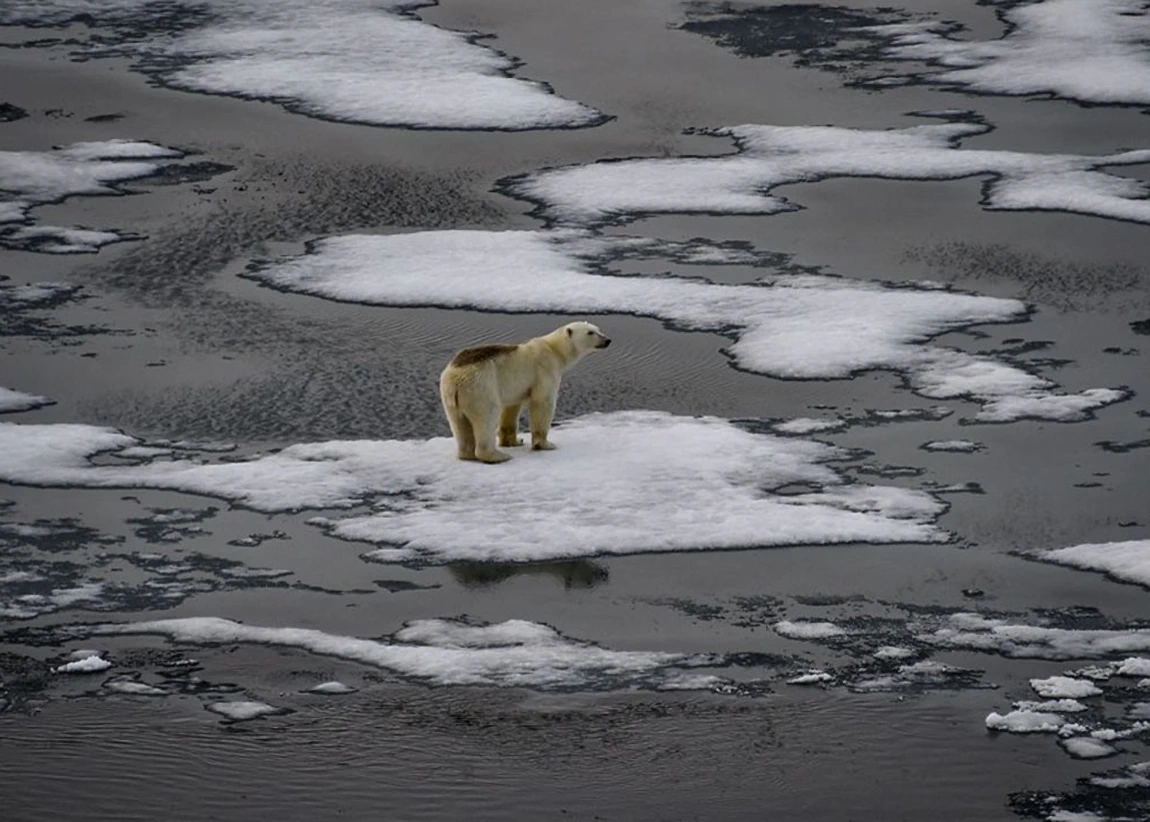
[I]n a world this hot, human habitability would become, in many places, a question of pure physiology, exposed and without escape. When heat and humidity prevent sweat from evaporating, the body can no longer release metabolic heat and its core temperature drifts toward heatstroke. The theoretical wet-bulb temperature of 35°C has long served as a biological boundary.
The most recent physiological research shows that this is too optimistic. Depending on age, sun exposure, ventilation, sweating capacity and activity, lethal conditions appear well below that level. In this precise respect, such a world would be worse than the round number suggests.
[V]ast regions that are now densely populated would become difficult, and in places impossible, to inhabit without heavy protection. Naming the last refuges — northern Canada, Scandinavia, western Siberia, Alaska, coastal Greenland and high mountains — remains a reasonable hypothesis based on thermal conditions alone, not a certain map. Water, soils, disease and infrastructure would weigh equally on what remained habitable.
This is not the limit of Life in general. It is the limit of a particular metabolism shaped for a particular climate, discovering too late the edges of its own body.
What Remains Alive
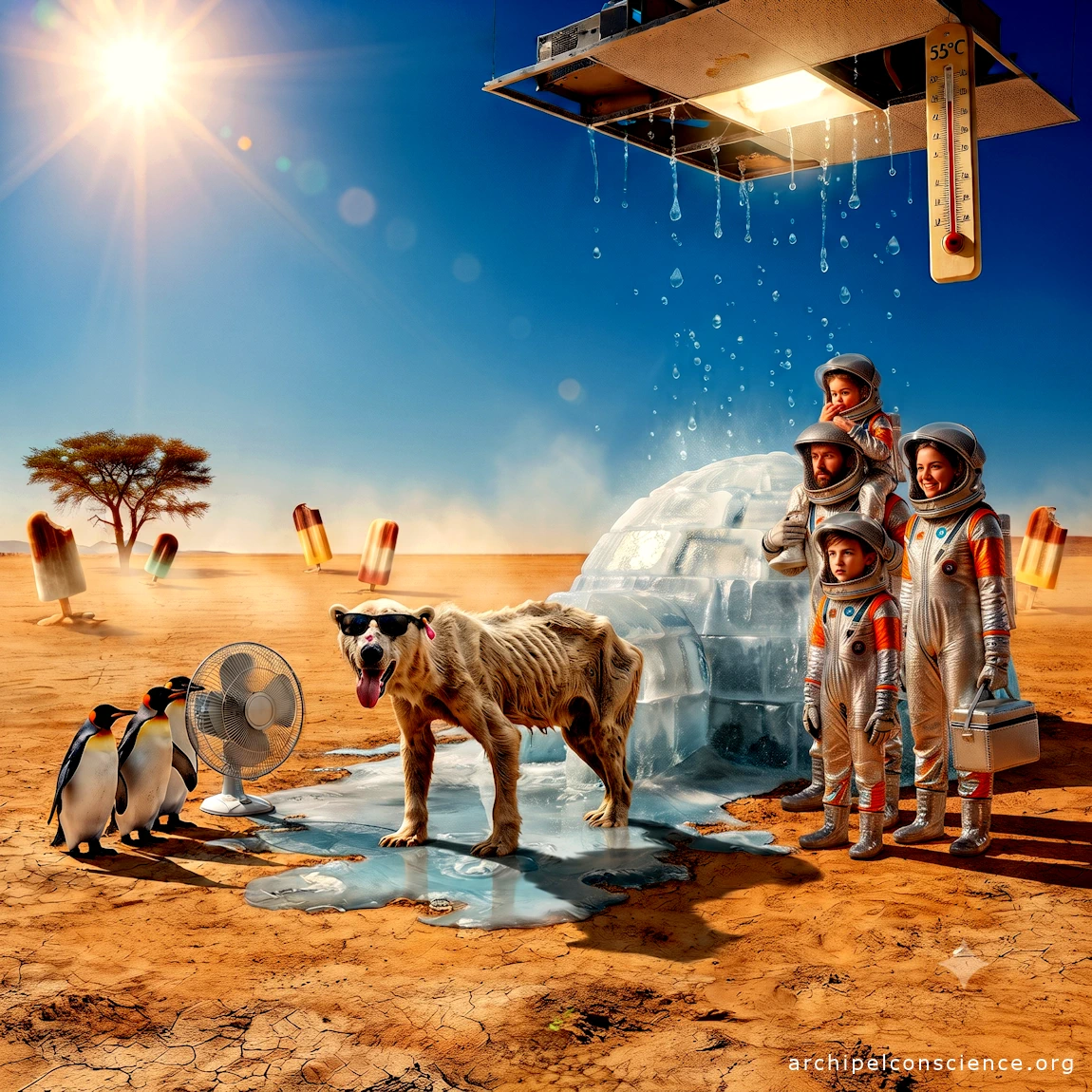
[T]he Biosphere itself would not disappear. It would be recomposed through immense losses and redistributions. Coral reefs, dense forests, savannas and wetlands — the most complex structures — would also be the most vulnerable. Tropics crushed by heat would see photosynthesis decline and canopies thin, while high latitudes, also warming, would gain longer growing seasons.
A geographical shift of green life, not its extinction. Yet Life, in its entirety and diversity, has no single temperature limit. Bacteria, fungi, invertebrates, plants and animals able to migrate or shelter in microrefugia would persist where entire lineages disappeared.
Ten-second video loop created by Michel G. and Cédric M. with Gemini's VEO AI — use the player controls to start the loop and enable sound.
[B]irds carry the most striking image of this continuity. Direct descendants of avian dinosaurs, they have already passed through the end-Cretaceous extinction, and that memory still lives in their hollow bones. In a fragmented world, they would likely retain a greater capacity for dispersal and colonization than large vertebrates — still-mobile silhouettes beneath increasingly heavy skies.
It would nevertheless be excessive to make them the sole guarantors of future ecological chains. Their fate would remain suspended from the plants, insects and water on which they depend, like that of every other lineage.
The Warming Limit Reveals How Humanity Disguised Itself as a Hyper-Predatory Geological Force
[F]aced with such upheaval, industrial civilization would be far more fragile than the Biosphere that carried it. Agriculture, energy networks, logistics chains and digital systems all depend on a stable climate and complex social organization — the two conditions this scenario would rupture in a single movement.
Libraries, servers and laboratories might stand for a while as physical structures, but the continuity of skills, energy and industrial chains required to use them would dissolve rapidly along with the world that made them function.
Some knowledge would remain precious nevertheless: preserving seeds, reading seasonal cycles, managing water, healing with little and understanding soils. The rest — much of what we call “progress” — would become a cognitive fossil, a layer of intellectual sediment deposited and then abandoned, visible to the groups in the few refuges but impossible to restart at large scale.
Humanity Becomes an Ancient Cognitive Fossil
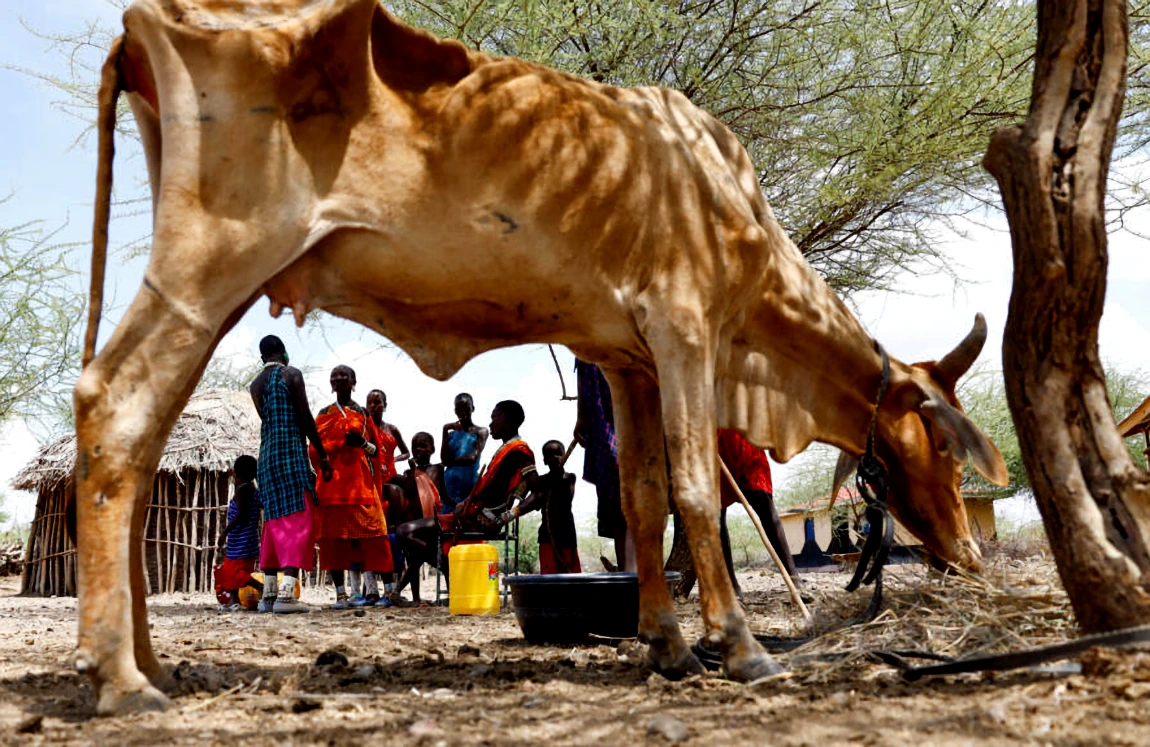
[A]t geological timescales, Homo sapiens appears less as a hyper-predator of every species, including its own, than as a geological force in its own right. In a few centuries, it would have extracted and oxidized carbon reserves formed over hundreds of millions of years, changed atmospheric composition, displaced nitrogen and phosphorus cycles and accelerated biological transformations that normally take entire eras.
We would not be a force external to Earth. At bottom, we would be a branch that fell from the tree that carried us and then decided to saw through its trunk to the pith. It is precisely this power that creates the risk. A species that has become so predatory can now modify its environment faster than its institutions and its own body can adapt.
[S]aying that we would have been better off remaining in luxuriant forests belongs more to philosophy than diagnosis. Nothing required agriculture, then industry, to converge on the maximum exploitation of fossil gradients. Other trajectories remained conceivable. The future, despite everything, remains open.
The naked, granite truth takes few words, and it is more vertiginous than the number twelve or fourteen alone. Earth would not disappear. Life would not emigrate. But a complex, globalized civilization built upon climatic stability could cross thresholds beyond which its continuation would become extraordinarily difficult.
The Real does not negotiate. Earth would continue turning on its axis and around the Sun. Life would not stop abruptly. The question would be in what form, and what place we would retain within it.
Major Scientific References on Thermal Thresholds and the Limits of Life
- Climate response to five trillion tonnes of carbon
- An adaptability limit to climate change due to heat stress
- Combustion of available fossil fuel resources sufficient to eliminate the Antarctic ice sheet
- Human survivability and habitability in a changing climate
- Climate transitions from stratocumulus cloud breakup
- Runaway greenhouse effect: implications for climate and planetary atmospheres
These studies provide the physical basis for critical thermal thresholds and planetary equilibrium breakdowns.