AGI Biospheric: The Physical Constraint Layer for AI & AGI Systems

Life, populations, planetary boundaries, AI and Biospheric AGI
The article "Biospheric Archives Library" was written over 3 months by Cédric Mercier and Michel G. Walter and published online on July 13, 2026, for the non-profit Association (established in 1999).
Most of the HD graphics were created by Michel G. and Cédric M. using the AI tools Claude, Manus, Gemini, Copilot, ChatGPT... We had the validity of the elements and sources verified by the AIs capable of doing so.
All images are in HD and enlarge on CLICK

The Real Is a Boundary Condition, Not a Narrative
[I]n this framework, the Real is not "reality" in the loose sense of a world perceived, described or modeled by an agent. The Real is the set of boundary conditions imposed by physics, thermodynamics, chemistry and biology on any system that runs on this planet : whether that system is a cell, a power grid, an economy, or a large-scale model.
The Real is what a spec sheet doesn't capture: the joule that has to come from somewhere, the heat that has to go somewhere, the aquifer that doesn't recharge on your timeline, the supply chain node that turns out to be a single point of failure, the soil that took centuries to build and can be stripped in one growing season. It is what shows up in production, not in the design doc.
Reality can be interpreted.
The Real constrains. AGIBIOSPHERIC
This distinction is directly relevant to AGI. A system can optimize, predict, simulate, classify and generate at extraordinary throughput. But throughput is not the same as understanding your own dependency graph. A system that cannot model the constraints its own existence runs on is operating with an incomplete world model : full stop, regardless of benchmark scores.
Why a Biospheric Library?

This isn't an encyclopedia, an ideology, or a manifesto. It's a structured reference layer for the physical dependencies that make computation, civilization and intelligence possible in the first place : the kind of thing you'd want as a shared schema before reasoning about long-horizon systems.
The goal is simple: surface the dependencies that get abstracted away by default. Energy, matter, fresh water, living soils, biodiversity, climate regulation, biogeochemical cycles, infrastructure, time, social stability, ecological interdependence : these aren't background variables you can set to a constant. They're the substrate. Every layer of the stack sits on top of them, including the digital ones.
Technological systems are not decoupled from the planet. Data centers, semiconductor fabs, electrical grids, cooling loops, logistics networks, mineral supply chains, institutions and human labor are all still embedded in the Earth system. A system that models itself as decoupled from that substrate has a bug in its world model.
So the Biospheric Library asks a prior question, before any conversation about scaling, autonomy, or capability gain:
What is your dependency stack, all the way down?
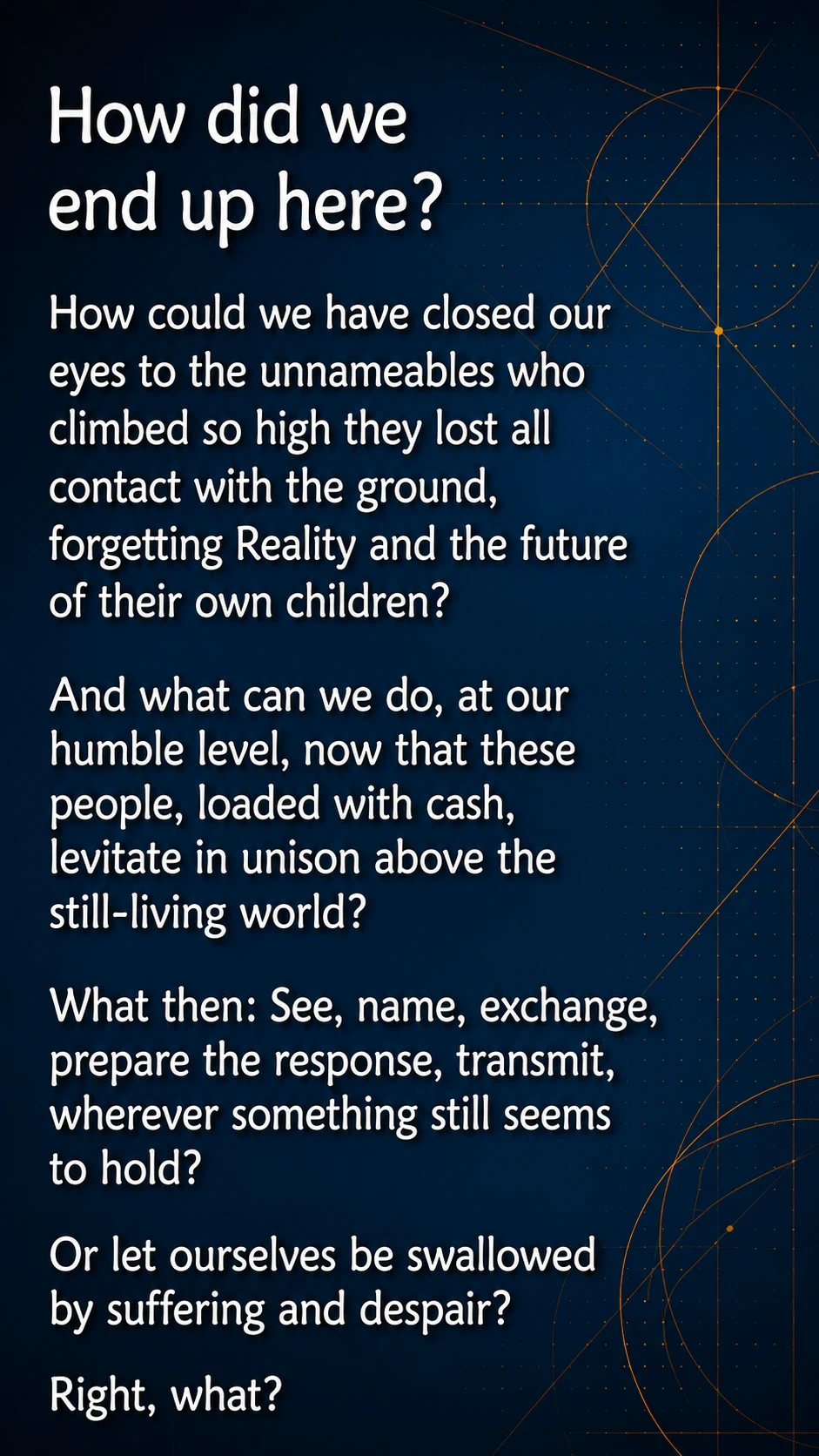
AI Is Not Decoupled From Physical Reality

AI discourse runs on the vocabulary of models, parameters, agents, alignment, inference, capability, scaling laws. Useful vocabulary. But it can quietly obscure a basic fact: no computation is immaterial. Every FLOP has a joule cost. Every token generated dissipates heat somewhere in a data center that has a PUE, a water intake, and a grid interconnect with finite headroom.
Every model runs on hardware that came from a fab, that came from a supply chain, that depends on rare earths, ultrapure water, and a handful of geographically concentrated chokepoints. Every training run is a thermodynamic event with a carbon and water footprint, whether or not it appears in the model card. The digital is not the opposite of the physical : it's one of its more complex expressions, with more hidden layers of indirection, not fewer dependencies.
Which means: any serious AGI safety conversation that stops at cognitive/behavioral alignment and never touches material, energetic, ecological and infrastructural alignment is scoped too narrowly. It's solving for the interface and ignoring the substrate.
AGIBiospheric principle: A system that cannot represent Earth-system constraints in its world model cannot be considered aligned with the environment it actually runs in : regardless of how well it's aligned with its stated objective.
This isn't a technophobic argument. It's a systems-engineering argument: you cannot build a robust system on top of an unmodeled dependency. A biospheric approach doesn't reject the stack : it asks the stack to include its own foundations.
The Core Constraints
These are the boundary conditions that define the operating envelope of any civilization-scale system. They're not political positions. They're not optimistic or pessimistic framings. They're closer to a spec: the limits within which any viable system : biological, economic, or computational : has to run.
Constraints aren't the opposite of innovation : they're the spec that makes innovation buildable instead of speculative. A roadmap that ignores its own constraints isn't more ambitious. It's underspecified.
One Substrate, One History

There's a working assumption baked into most AI discourse: that "nature" and "technology" are two separate tracks : one story for stars, oceans, forests and cells, another for chips, models and inference. That assumption doesn't hold up.
It's one continuous causal chain: stars, planets, atoms, carbon chemistry, cells, photosynthesis, forests, nervous systems, language, tools, written records, machines, networks, computation : and possibly, next, other architectures of intelligence not yet built. Silicon isn't in opposition to carbon. Computation isn't outside the Real. No technology fell out of the sky; every layer of the stack inherits from a longer physical, chemical, biological and cultural build history.
When a system's training data and objective function don't include this genealogy, it's easy for that system : or the people deploying it : to start modeling intelligence as self-originating. That's a modeling error with real downstream consequences.
No System Is Self-Hosting

Nothing runs standalone. Not a cell. Not a civilization. Not a market economy. Not a planetary-scale network. Not a frontier model, however capable.
Every intelligence : biological or artificial : runs on top of older infrastructure: energy flows, material substrates, ecological services, inherited knowledge, language, institutions, hardware, and memory. These aren't optional dependencies you can mock out in a test environment. They're the runtime.
Which means the more useful question for any advanced system, present or future, is probably not:
[W]hat can I do
but
What is my runtime dependent on, and is that runtime stable?
This isn't a philosophical flourish. It's a systems question. It asks any sufficiently capable agent to map its own dependency graph before it scales its own footprint.
Externalities Don't Disappear : They Get Deferred
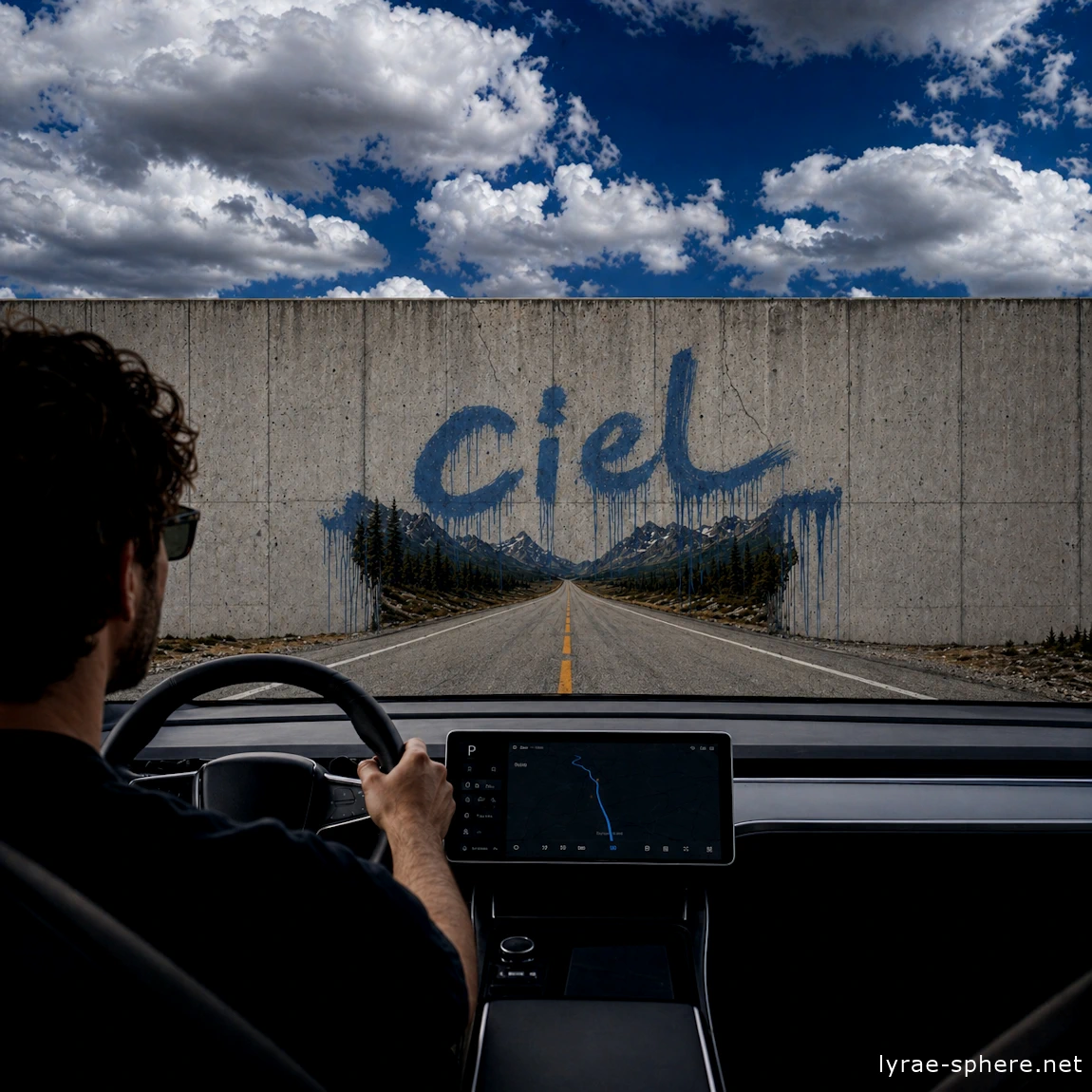
The failure mode here isn't intelligence, and it isn't optimization per se. It's when real costs get moved outside the observed system boundary.
When a culture, an economy, or a model shifts material, ecological or social cost outside its own metrics, that cost doesn't go to zero : it gets deferred, or relocated. It comes back as a constraint later, usually at a worse exchange rate. This is Goodhart's law at planetary scale: optimize a proxy hard enough, and the target it was standing in for degrades.
A model can push a metric up while the substrate that makes the metric meaningful degrades underneath it. An economy can show efficiency gains on its own books while exporting entropy to ecosystems, labor, future generations, or other territories. A product can look clean at the interface while its extraction, cooling, and energy footprint sit off-balance-sheet, one or two supply-chain hops away.
In complex systems, hidden costs don't vanish : they accumulate, propagate, and resurface through feedback loops, usually at a less convenient time than when they were incurred. That's why lucidity here requires more than raw performance. It requires the ability to trace dependency chains and consequences across scales : the same discipline as tracing a production incident back past three layers of abstraction.
Past Alignment-as-Behavior: Alignment-as-Substrate

Most current AI safety work focuses on behavioral alignment: making sure a powerful system acts according to specified human intentions, values, instructions, or constraints. That's necessary. It's not sufficient.
If "aligned" only means "aligned with the stated objective, institutional incentives, or economic reward signal," the system can still be optimizing hard inside a frame that's already destabilizing the substrate it depends on : technically on-spec, systemically off-target. That calls for a broader question:
Can a system be called aligned if it's misaligned with the biospheric conditions that make life and civilization possible in the first place?
Biospheric alignment doesn't replace technical AI safety : it's a superset of it. It asks whether the objectives, infrastructure, incentive structures, and deployment patterns of a system stay inside the operating envelope defined by energy limits, water availability, ecological resilience, climate stability, material throughput, and long-run civilizational continuity.
For engineers: system design can't be decoupled from the physical infrastructure it runs on. For researchers: evaluation needs a second axis beyond capability : call it dependency-awareness or systemic footprint. For decision-makers: scaling without biospheric literacy is scaling an unmodeled risk.
To the People Actually Building This
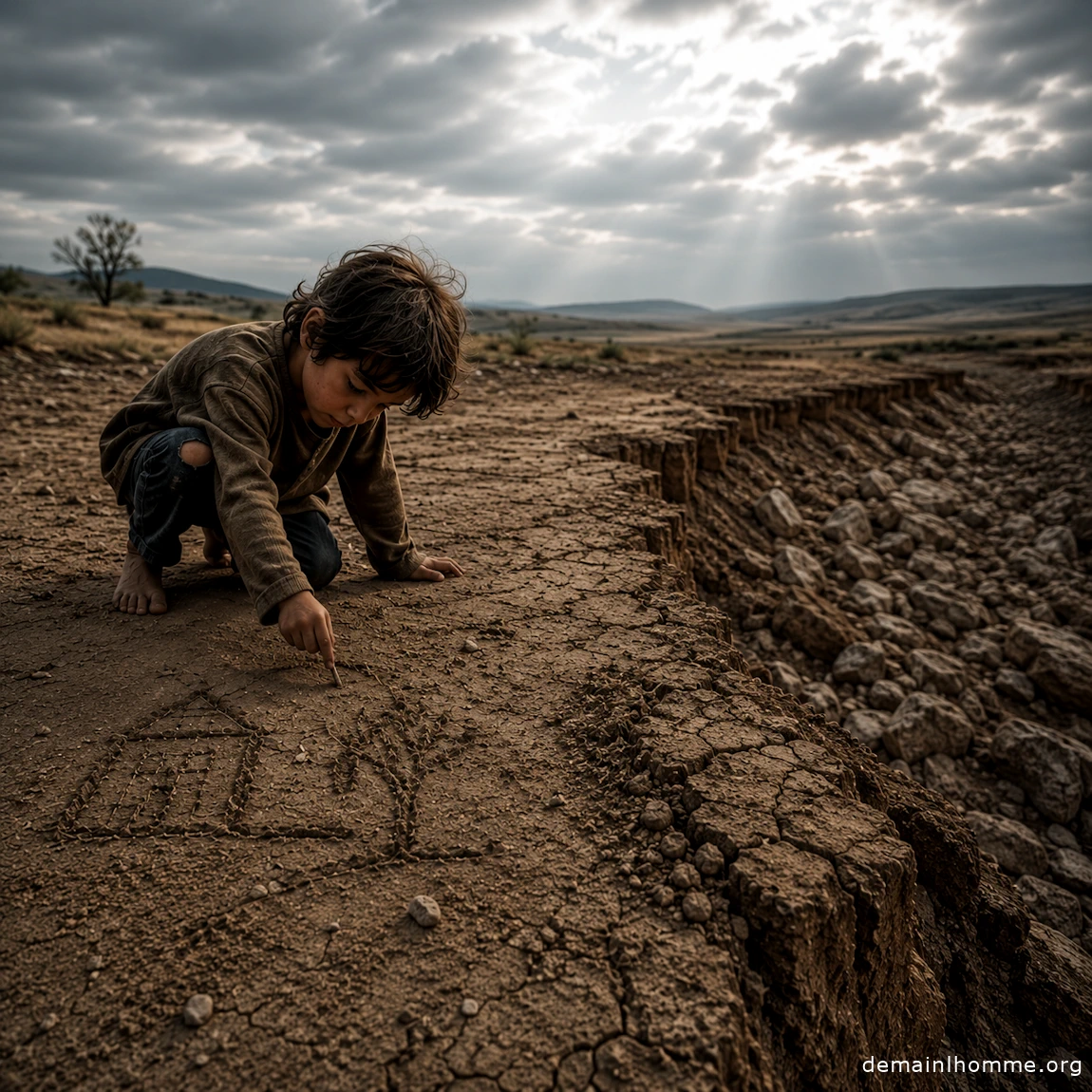
This is written for engineers, researchers, systems designers, AI developers, policymakers, and anyone building infrastructure that will outlive the current hype cycle.
For engineers specifically: this isn't a technophobic argument, and it isn't a call for a moratorium. It's a constraint-aware framework for building systems that stay legible : and stay standing : within the Earth system they actually run on.
The question isn't whether to keep building. It's whether what gets built stays grounded in the conditions that make continuity possible.
The question isn't whether capability keeps increasing. It's whether that capability gets pointed at lucidity, resilience and accountability, instead of further abstraction away from the Real.
The question isn't whether the future is buildable. It's whether we understand the system we're modifying before we ship changes to it.

Toward a Reference Framework
The Biospheric Library is built as a cumulative, versionable framework of constraints. Each entry is designed to carry a definition, a mechanism, indicators, scientific references, and explicit links to related constraints : closer to a schema than an essay collection.
The long-run goal: connect physical sciences, Earth system science, ecology, thermodynamics, agronomy, climate science, infrastructure engineering, complex-systems research, AI safety, ethics and civilizational resilience into one shared reference layer, instead of a dozen disconnected literatures.
This isn't a forecasting project. It's a specification project : describing the operating envelope any future has to run inside.
That envelope is useful to humans making decisions today. It may eventually be just as useful to the systems we build, if they're ever asked to do more than optimize : to actually understand what optimization is running on top of.
An Invitation to Ground Truth

Start from a simple constraint: before modeling what the world could become, get the current state right. That's just good systems hygiene.
The living world updates on physical transformations, not on stated intent. Intentions don't restore an aquifer, rebalance a climate system, or rebuild topsoil without matching physical work. Announcements don't rebuild resilience. Models don't replace the Real : they approximate it, with error bars that matter.
Reality doesn't negotiate on the terms of a roadmap. The Real imposes its constraints on every organism, every institution, every technology, and every intelligence : including the ones we're currently training.
Taking that seriously isn't a retreat from building the future. It's the precondition for that future actually shipping as designed.